Sunday, February 9, 2014

Apple releases new ads for the Mac

Apple releases new ads for the Mac

It’s been quite a while since Apple released ads for the Mac. All the recent memorable ads have either been for the iPhone or the iPad. In fact the last memorable ads for the Mac were the famous ‘Mac vs. PC’ series and it’s been three years since those came out. But now that Apple recently updated their MacBooks, they probably felt it was the right time to go ahead and make some new ads.

So now we have three new ads for the Mac that don’t concentrate on any particular model, but like the older ‘Mac vs. PC’ ads aim to glorify the Macs as a whole and all the features they have. They also fail spectacularly at doing that.

The new ads have an Apple Store Genius going around helping people with their Macs. The first ad is in an airplane, the second is where the Genius helps his neighbor with something and the third where a guy accidentally buys something that he thought was a Mac.

The first two ad are supposed to show the features in some of the apps that come built-in, such as iMovie and iPhoto. But in doing so, Apple goes against its own principles of making software that is easy to use. By showing common people struggling to use their own software without the help of an Apple Store Genius (who for some reason is everywhere but in the store itself), the ads send the wrong message that Apple’s software is too complicated to use.

The ads also make an attempt at humor, which falls flat on its face. The original Mac vs. PC ads were actually funny. These seem to be trying too hard, and failing harder.

Anyway, you can find all three ads below and make an opinion for yourself. It must be said, though. Apple’s standard for ads have fallen greatly over the past couple of years.

Apple rejecting apps that use the Dropbox SDK and allow purchases outside the app

Apple rejecting apps that use the Dropbox SDK and allow purchases outside the app

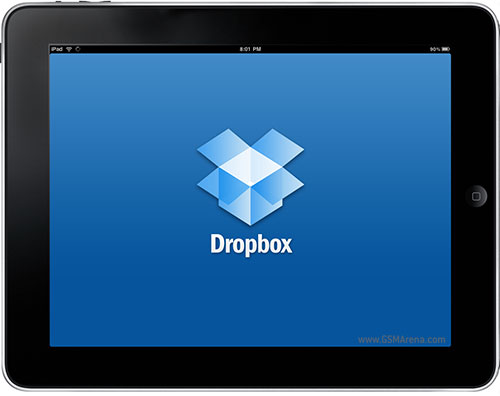
Apple is under fire once again due to its App Store policies, this time for rejecting apps that use the Dropbox SDK. It goes like this: some developers were found complaining on Dropbox forums that their apps made using the Dropbox SDK are being rejected by Apple.

The reason given by Apple for these rejections is that these apps do not use in-app purchasing and instead open Safari and take the user to the Dropbox site and lets them purchase additional storage from there. Apple has had this rule for some time now that any app-related purchase should always take place within the app itself using in-app purchasing and not outside the app. Any app found in violation of this rule will be rejected or removed.

Some of the developers are finding this hard to work with because they do not intend to make the user purchase additional storage. The only reason they are taking the user to Safari is so that they can log in to their Dropbox account, that too if the device does not already have the Dropbox app installed. What the user does after that is beyond the control of the app or the developer. Since the user is in Safari, they can just go to any site and do whatever they want. Apple sees this as violation of their rule. The developers see this as downright ridiculous.

Now Dropbox has released an updated version of their SDK that they hoped would take care of the situation but so far it hasn’t. Now they say that they are working with Apple to find a better solution to this problem.

Source

Apple could rack up an $11 billion bill with Samsung before 2012 is out

Apple could rack up an $11 billion bill with Samsung before 2012 is out

With all the market rivalry, patent lawsuits and sly televisual marketing going on between Samsung and Apple, you’d be forgiven for thinking all ties between these two companies would have already been severed at this heavily tumultuous stage in their relationship, but at the end of the day business is business and both these big names know that need to work together to make money.

Apple will owe Samsung a lot of money before the end of 2012

The likes of LG and Sharp were initially entrusted with creating displays for Apple’s newest tablet, set to touch down in a couple of days, but when they were unable to deliver due to manufacturing issues, Apple passed the task to Samsung who will now be producing the new iPad’s QXGA display panels (for the time being at least).

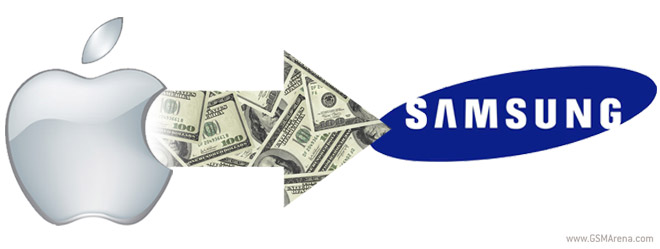
As such the cost of these panels will add to a growing bill that Apple currently has under contract with Samsung, which by the end of this year is expected to total somewhere in the vicinity of $11 billion. The running total for parts bought by Apple from Samsung is rumored to stand at approximately $9.7 billion which already dwarfs last years final bill of $7.8 billion.

An unnamed Samsung official stated, “The amount of the current contract is around $9.7 billion. The popularity of Apple products lines the pockets of Samsung as well. The amount may go up to $11 billion, depending on the demand for Apple products.” According to the same source, Samsung are also on the cards to produce a 7.85″ display supposedly for a smaller iPad along with high speed solid state drives (SSDs) for Apple’s latest MacBooks.

Presently displays, processors, DRAM, NAND flash chips and similar components are all supplied to Apple from Samsung. Based on a conversation had at the end of last year between Apple’s CEO Tim Cook and Samsung Electronics’ Chief Operating Officer Lee Jay-yong, the Korean company will be a key supplier of Apple until the end of 2014.

In their current states, it would appear that Apple need Samsung in order to help produce their latest iPad to an acceptable quality and at an acceptable pace, whilst Apple is Samsung’s largest single customer and as such it just makes sense on a corporate level to continue to do business, despite the bad blood in other areas of their relationship.

Source | Via

Monday, January 6, 2014

Each Google I/O attendee gets free Nexus 7

Each Google I/O attendee gets free Nexus 7, Galaxy Nexus and Nexus Q

One of the first people to get the Google Nexus 7 tablet are the developers and attendees at the Google I/O conference, which is currently taking place in San Francisco.

It’s a sweet déjà vu from a year before, when Google gave away free 32GB Samsung Galaxy Tab 10.1, Samsung Nexus S and Samsung Chromebook to each attending developer. Now the company is doing it again, but this time with its own, freshly announced Nexus 7 tablet, a brand new Galaxy Nexus and the innovative Nexus Q.

All 6000 developers and attendees will receive the aforementioned gadgets. This is the Google way of showing their gratitude to the hard-working Android developers.

What’s even better is that some of the gifted Nexus Q and Nexus 7 units will inevitably find their way to eBay in the next few days, so you might get a chance to get them before the public launch.

Source

Apple's market cap drops below $400 billion for the first time in ages

Apple's market cap drops below $400 billion for the first time in ages

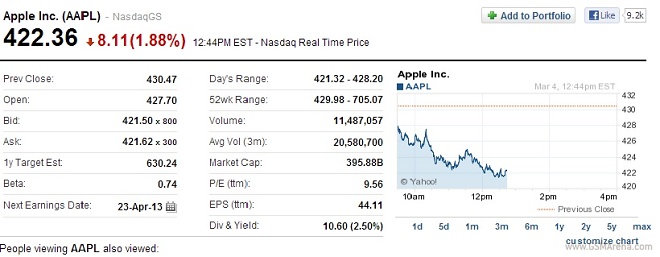
Apple’s stock has a taken a hit and the company’s market cap have dropped below $400 billion for the first time since January 2012. The Cupertino’s stock has been wobbling ever since the launch of the fifth-generation iPhone and according to few reports, the investors are concerned about the company’s contracting profit margins.

Apple’s upcoming products and innovations along with the superabundance of the assets have all raised a cause of concern among the investors, resulting in the drop of company’s share price and overall market cap.

Apple’s market cap saw a high of $650 billion in September 2012, but has been dropping ever since and the stock is now trading at the same value as in January 2012. Apple’s market cap is currently at $395.88 billion, but analysts expect the company to bounce back over the $400B mark in the upcoming weeks.

Via

Sunday, December 15, 2013

Samsung Galaxy S4 uses the latest Gorilla Glass 3 for screen protection

Samsung Galaxy S4 uses the latest Gorilla Glass 3 for screen protection

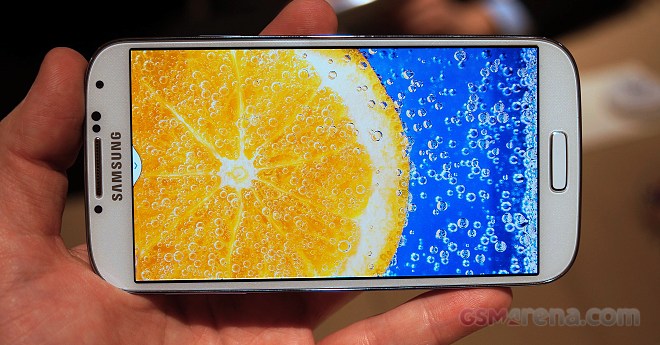
Somehow last night during the announcement we missed the fact that the Galaxy S4 is the first phone to feature Corning’s Gorilla Glass 3. Yeah, I know, it’s not a big thing, but tech geeks are sometimes excited by small things like this.

The Gorilla Glass 3 was announced back at CES, earlier this year, and is marketed as having Native Damage Resistance?. Of course, that’s just a bunch of words marketing people love to use. What matters is that the new glass reportedly provides enhanced scratch resistance, reduced scratch visibility, and better retained strength once a scratch occurs.

According to the manufacturer, the Gorilla Glass 3 is stronger, and is 3x more scratch-resistant than Gorilla Glass 2. Plus some 40% less scratches are visble once they occur.

Source 1 | Source 2

BLU Life One hands-on impressions

BLU Life One hands-on impressions

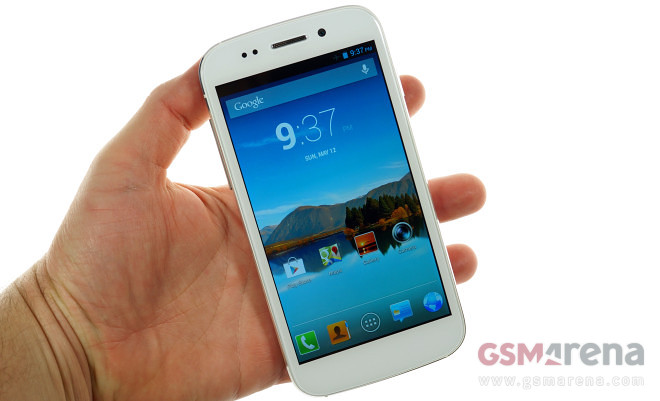
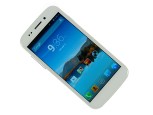
With a 5” IPS LCD display, the BLU Life One sits above the entry-level Life Play, and below the phablet-proportioned Life View in the freshly launched smartphone series from the Miami based manufacturer. Given the increasing popularity which the 5” Android smartphones enjoy lately, the dual-SIM BLU Life One is likely to generate the most interest from potential users.

Save for the smaller display, the BLU Life One packs the same spec sheet as its bigger brother which we previewed a couple of days back. The highlights include a MediaTek MT6589 SoC with 1.2GHz quad-core Cortex-A7 CPU, PowerVR Series5XT series GPU, 1GB of RAM, 16GB of built-in expandable storage, 5” HD display, and a 13MP camera on the back of the device, coupled with a 5MP unit at the front.


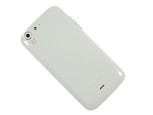
BLU Life One live photos

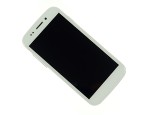
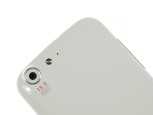
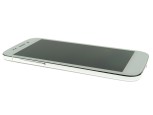
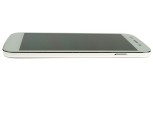
At a first glance, the BLU Life One does not look as premium as the bigger Life View due the former’s plastic back cover. The frame of the handset however, is made from aluminum, so it feels pleasant and solid to hold.

The measures of the Life One are 144 x 73 x 8.9 mm, while its weight tips the scale at 145 grams. The device is powered by a removable 2,000mAh battery.


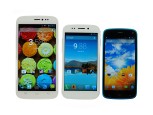
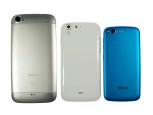
BLU Life One sized up against the rest of the Life series

When it hits the shelves, the BLU Life One will boot Android 4.2 out of the box. Like in the case of the Life View, the Life One offers a pleasant Android OS experience thanks to its quad-core SoC.

The BLU Life One is priced evenly with its larger sibling � at $299 unlocked, free of contract commitments. For the money, the latest BLU offering represents good value, thanks to its solid build, good looks, and rich functionality. The BLU Life One, together with the rest of the series will hit the shelves at the end of this month.